
Some artists design clothes. Daniela García designs the inner lives of characters. Her work lives in the quiet space where psychology, memory, and story collide—where a single wardrobe choice can reveal more truth than a page of dialogue. Born in Sonora, Mexico, and now working in Los Angeles, Daniela approaches costume design as narrative architecture. Fabric isn’t decoration to her; it’s evidence. It holds history, contradiction, desire, and fear long before a character ever opens their mouth.
From an early age, Daniela gravitated toward visual language. Cameras, clothing, composition—these weren’t hobbies, they were instincts. They became her way of exploring identity and human complexity, a fascination that followed her straight into formal filmmaking. At the New York Film Academy, she immersed herself fully in the craft—writing, directing, producing—learning how stories are built from the inside out. But it was costume design that ultimately claimed her. Not as a department, but as a calling. She understood early on that what a character wears is never neutral. It’s emotional subtext made visible.

That director’s mindset still shapes everything she designs. Daniela’s own films pushed her to confront difficult, often uncomfortable truths. Projects like Viva, a raw look at contemporary Mexican identity, and her thesis film Cruda Verdad Dura Moral—a stark exploration of assault, loyalty, betrayal, and social silence—cemented her belief that storytelling should never flinch. She independently crowdfunded nearly $5,000 to bring Cruda Verdad Dura Moral to life, rallying collaborators who believed in the urgency of the story. With the film preparing for a 2026 festival run, it stands as proof of her creative resolve and her ability to translate moral complexity into visual language. These experiences sharpened her instincts as a designer who understands that every costume carries both scars and aspirations.
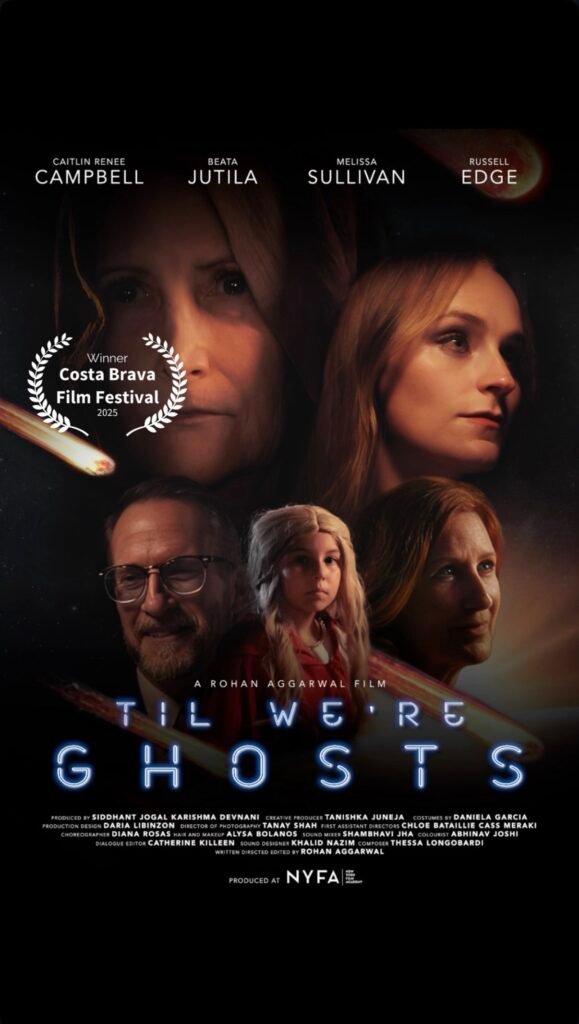
In Los Angeles, Daniela has built a reputation as a designer with rare emotional precision. Her work on Drama Box vertical series—including After I Had the Billionaire Hobo’s Baby, Taming the Football Bad Boy, and others—shows her ability to elevate contemporary storytelling with subtle psychological detail and character-driven style. Her costume design credits span a diverse range of short films such as Haim, Rebel Flowers, Waltz for Isabelle, Lost Trail, Thank You for Coming, Get Out of My House, N’Oublie Pas Vivre (screened at the Glendale International Film Festival), and The Callback (screened at the Valley Film Festival). She has also expanded into production design with The Vinyl Collection, proving her strength in building cohesive visual worlds where environment and wardrobe speak the same emotional language.
What sets Daniela apart isn’t just skill—it’s conviction. She treats costume as the emotional spine of a story. Every color choice, every texture, every silhouette is intentional. In her hands, clothing becomes psychology: a confession stitched into a sleeve, a memory embedded in fabric, a quiet rebellion hidden in plain sight. Her background as a director gives her an uncommon advantage—she designs for the story’s heartbeat, not just its surface.

Deeply committed to both craft and community, Daniela is an active member of the Costume Society of America and Women in Film, organizations dedicated to excellence, representation, and creative growth. Within these spaces, she continues to evolve—not only as a designer, but as a voice shaping the future of visual storytelling.
Daniela García is building more than a résumé. She’s building meaning. Each project adds another layer to a body of work rooted in empathy, intention, and truth. She isn’t simply dressing characters—she’s giving form to their humanity. And as her journey continues to unfold, one thing is already clear: her designs don’t just support the story. They are the story.
Follow Daniela García Online
Instagram:
https://www.instagram.com/daniellaaagr/