What To Know
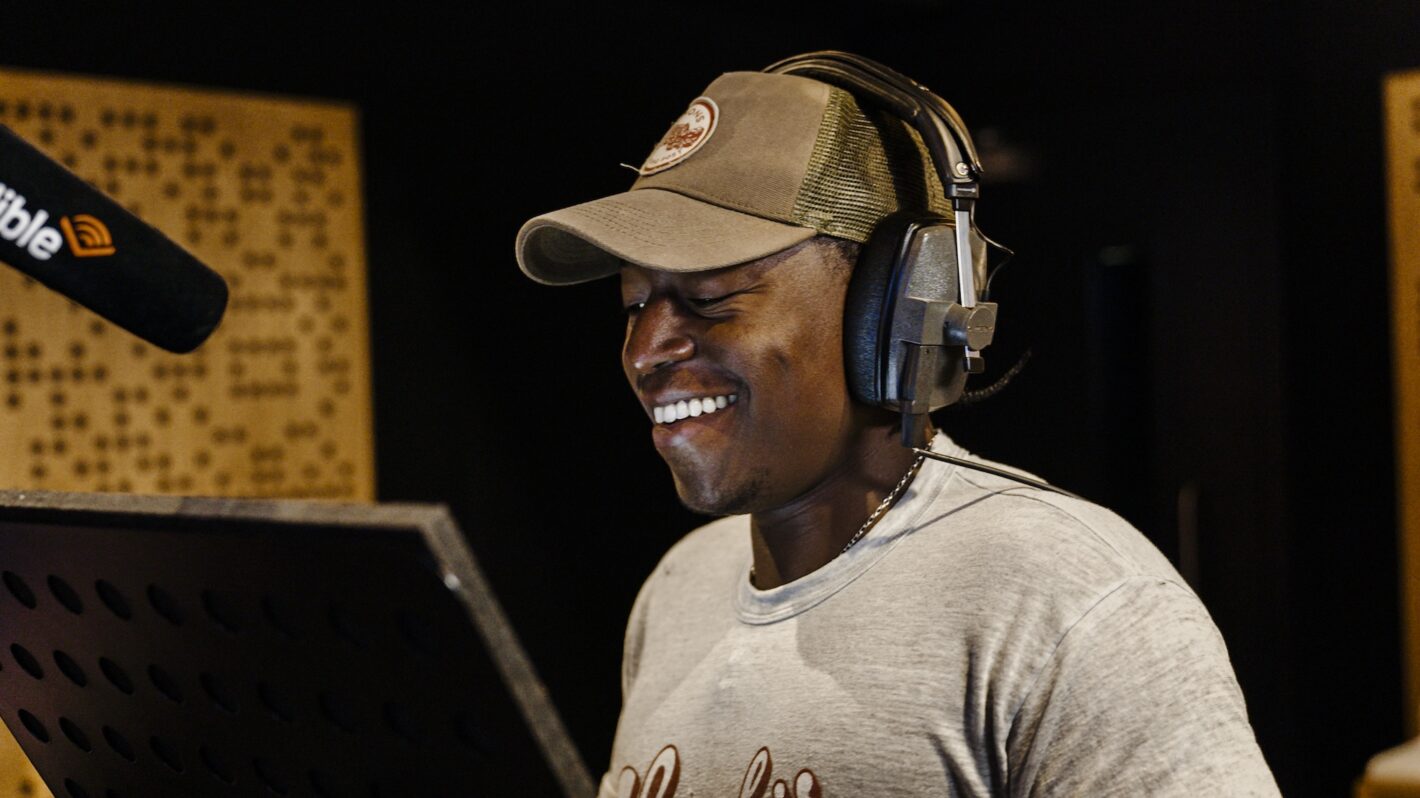
- David Jonsson stars as Dr. John Seward in Audible’s Bram Stoker’s Dracula, alongside Maggie Gyllenhaal as Van Helsing.
- Jonsson discusses how recording the audio drama solo was a unique, full-circle experience.
- He expresses a strong desire to work with Gyllenhaal as a director in the future. Plus, his hopes for more films with Cooper Hoffman after The Long Walk.
David Jonsson really wants to work with Maggie Gyllenhaal. That’s one of the main takeaways from our interview with the upcoming Black Panther star about his latest acting venture, Bram Stoker’s Dracula on Audible. The immersive audio experience stars Jonathan Bailey as Dracula and Ella Purnell as Mina, with Jonsson as Dr. John Seward, Gyllenhaal as Professor Van Helsing, and more (check out our interview with Gyllenhaal about Dracula here).
The Gothic horror adaptation came out on October 1 on Audible and provides a theatrical rendition of the classic novel that’s more like a radio play than an audiobook. The cast, which includes Aimee Lou Wood as Lucy, Louis Partridge as Jonathan, and Lesley Manville as Mrs. Westenra, recorded their parts individually, but this wasn’t Jonsson’s first go at a project like this.
Jonsson’s first professional acting credit was a Doctor Who podcast series called UNIT: The New Series, which came out in 2017. In the almost 10 years since, he’s become one of the industry’s biggest up-and-coming stars thanks to an impressive succession of projects starting with HBO’s Industry, the critical darling rom-com Rye Lane, a memorable performance in Alien: Romulus, a movie star-making turn alongside Cooper Hoffman in The Long Walk, and now, he’s Marvel’s next Black Panther.
Jonsson’s star is quickly on the rise. Here, he discusses the full-circle moment Audible’s Dracula has given him and who from the audio cast he wants to work with next, with TV Insider. Plus, he comments on Industry coming to a close with Season 5 and his hopes to have an ongoing artistic partnership with Hoffman after The Long Walk. Their second film together, The Chaperones, is already on the books.
Your first credit on IMDb is a podcast series called UNIT, a Doctor Who podcast series. Almost 10 years later, you’re back in this medium, but your career has changed so much. Does it feel like a full-circle moment?
David Jonsson: Yes, a full-circle moment in a way that I didn’t expect. No, look, inevitably you’re just doing things that you think you can add something to or learn from. And this, I think Bram Stoker’s Dracula is truly special. I mean, I studied it at drama school. It’s all those classics that people pull from and rip off and use again. And if this was a film and I was playing Dr. Seward, I don’t think it would work for me because I don’t think I could add anything to it. What was nice about this one is it was about finding who he was through the medium of voice, and that taught me so much. So, a full-circle moment in a way that I’m still learning is what I’m trying to say.
What do you mean by that, that you don’t think you could bring something new to the role on screen?
I think Dr. Seward on screen is a very hard role to do. Mary [Lambert, Audible’s Dracula director] and I spoke a lot about this, and we always felt that he was never fully realized. He’s a man who’s backed by science. He believes in science; he knows what he knows, but inevitably he’s in a supernatural world. And with that said, he’s having to break down what he believes for love, for the greater good. He’s like a weird anti-hero in many ways. And I think with that said, it’s hard to get that right on screen, especially when it’s called Dracula. Do you know what I mean?
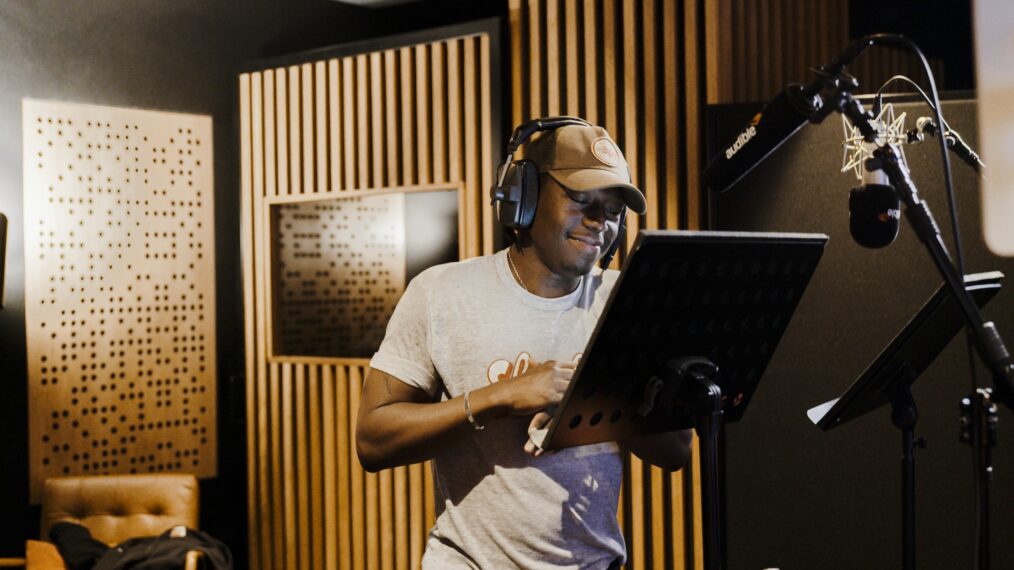
Doing it as an audio drama — and the good folks at Audible who really gave us a great script — I felt like there was so much more that I can get underneath because the audience are solely hearing Dr. Seward for a certain period of time. And that means that it’s like recording the whole thing as a closeup. And that means you’re just focused on him, and that doesn’t always happen on film. Does that make sense?
Audible
It does, yeah. It’s interesting though. I spoke with Maggie Gyllenhaal previously about her experience with this, and she was saying she wished she could have had all the cast in the room recording together to have that theatrical feeling to it. But what you’re saying is very interesting in that having that solo experience helped with the performance.
Well, for me, for Dr. Seward, absolutely. However, can I be honest? I have been saying one of the weirdest things about this was not seeing anyone. You’ve got such an awesome cast, and one of my favorite people is who you’ve just mentioned, Maggie Gyllenhaal. But I do think for me it was a lesson in trust. You kind of trust that their performance is legit, their performance is something, and my performance, you don’t try and push it because you can’t hear them. You still give all the nuances that you might give and trust that they’ll be used and used right. I think actually we got that in this one, so that was cool.
Who were your scene partners recording this? Because you have to react to something, right?
That’s right. We had two amazing actors, their names escape me now, but they were phenomenal. And actually, it feels like they do a lot of Audible recordings or audio recordings. I’m like, “Man, the muscles that they’re using are entirely different sometimes.” I’m like, “Man, I need to step up my game because they’re doing something that’s truly transformative in their voice.” I’m like, “Oh, that’s awesome.” So, thank God for them as well.
Even without them, working with Mary, Mary’s all about character. She wouldn’t say action. She’d say, “Three, two, one, go.” Which was just to try and get… I think it was like, we’re not going to make this into something crazy or something that’s big, something that’s kind of royal. It’s just about acting. Surprise yourself. It’s always three, two, one, go for me. And I really liked that. So, even without them [the cast in the room], having a Mary meant that we would still really try and get to something that felt real, and that was awesome.
Audible
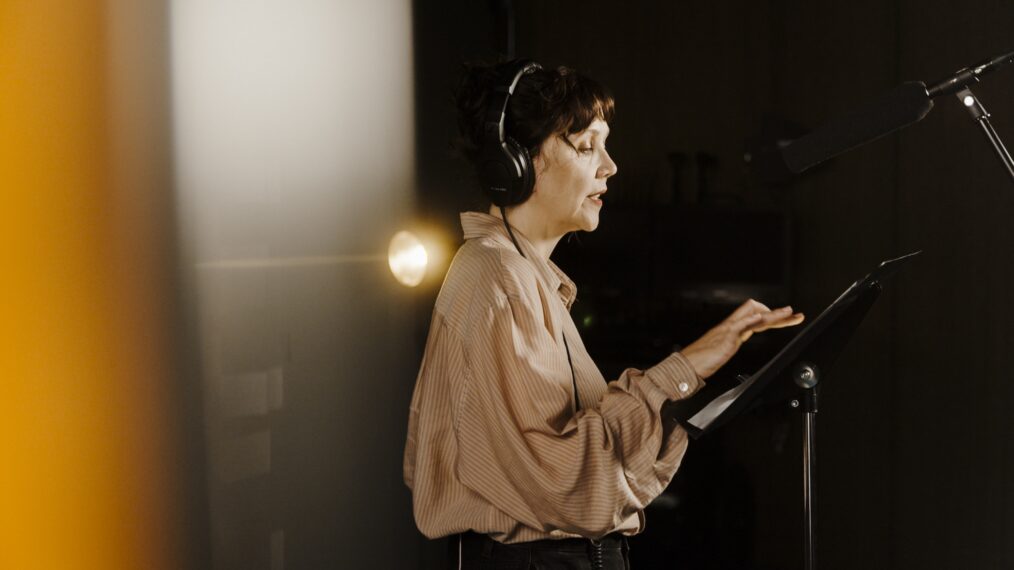
And how did the experience flex acting muscles you didn’t expect to have to use? That’s something that I touched on with Maggie. She said having to make the sounds of movement for the character was new for her. What was that experience like for you?
It’s funny. When you say Maggie, I’m like, “Well, whatever Maggie says is what it was.”
Maggie is law.
Yeah, I’m obsessed.
For me, it was more… Again, I keep saying this word, but I’m not being cute about it. It’s trust. It’s trusting. And I think for me, you’ve got to trust that whatever you are doing is going to be used in the right way.
So, for instance, I just spoke about it being a closeup constantly because the mic is [close to your face] and that’s what’s getting everything, but that doesn’t mean you act from just here. I’m not really good at that. You still do what you do, and you’re hoping that even slight movement of a shoulder is going to make a difference in saying no. You know what I mean?
That’s the skill, and that’s the kind of trust that you’ve got to [have]. It’s not about making sounds; it’s about feeling, and that still translates, in my opinion, in an audio drama, especially with this one.
What did you learn working on this that would be helpful on screen moving forward?
Well, I think the difference with a movie, which is what I’ve been lucky enough to do for most of my career, is you shoot a wide, you shoot a semi, you shoot a closeup, and then you move on. Or you have really different directors who I really enjoy, and they put the camera in very strange places, and you still give it something.
This, I told you, just felt like a closeup the whole time. A close 60 minutes of a closeup or an hour and a half of a closeup for a regular feature film is a lot, not just to watch, but for an actor. And you’ve got to realize how to modulate that. I think that is something that we rarely get: An hour and a half closeup. That for me felt really special because I think you can’t contrive it, you still got to keep it true, but you still got to know the mic is here. And taking that back into film, I think I’ve got some new weapons in the artillery to try.

Industry Season 1 (HBO)
Such a great cast here, but is there anyone you’re itching to work with after this?
Maggie [smiles]. Sorry, was that predictable? [Laughs.]
No, no!
Honestly, yeah, we do have a really brilliant cast, and I do feel honored to be in the same job as them. I truly love Aimee Lou Wood. She’s a friend, and we haven’t worked together yet, and I think that would be really special for us too, but everyone was really good, and I really do love Maggie, not only as an actor, but also as a director. I think she’s a phenomenal director, and I’d love to work with her in any capacity.
That was going to be my next question. Do you want to be directed by Maggie?
Yeah [laughs]. Yeah, that could be nice.
Yeah. I asked her, “Did this give you the acting bug? Do you want to go back?” And she was like, “No, I really like directing.” She had fun, though!
I’m glad she had a fun time, but also she can do all of it. So, hey man, kudos to her because she can switch. She’s great.
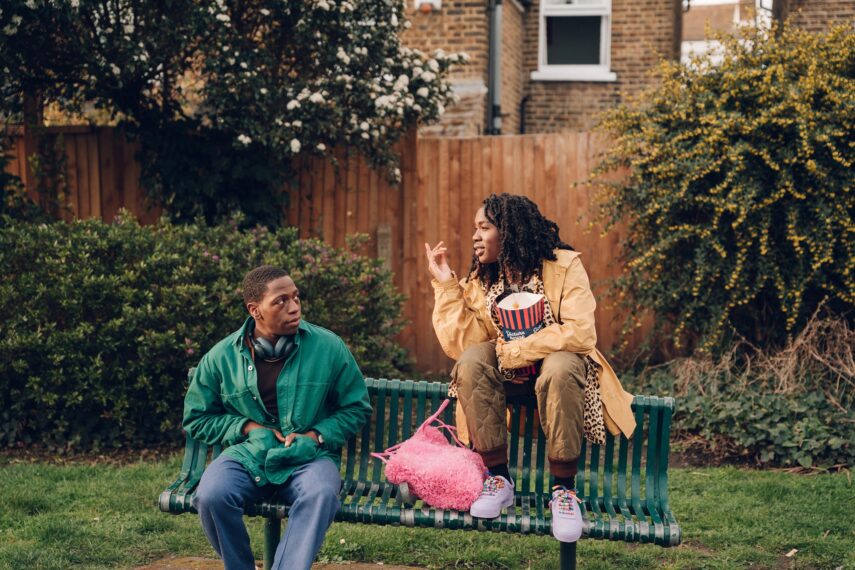
David Jonsson and Vivian Oparah in Rye Lane (Chris Harris. Courtesy of Searchlight Pictures)
Industry is filming its final season right now, and your presence has been very missed in the show since Gus left. What are your thoughts on it coming to an end and how the show has really changed the cast’s careers?
Hey, I always say this: I’ve got so much love for that show. I’m truly grateful. It’s the first opportunity and the first chance I really got to do something that’s very different to me. It’s funny; normally actors should probably say it’s the first chance you got to be seen. That wasn’t it for me. It was the first chance to do what I really came here to do, which was push the envelope and try and be something different. I’m really grateful to the whole show, not just the writers, not just the producers, but the whole show for letting me do that. I’m always waving the Industry flag, and I really hope it’s a special season for them.
I, too, am always waving the Industry flag. You’re also reuniting with Cooper Hoffman from The Long Walk in an upcoming movie, The Chaperones. What’s the latest on that?
I don’t know how much I can say, but I’m just going to say, I’m very, very excited about it. I’m truly excited about it. I think it’s a really special movie, and India Donaldson’s wrecking it. I don’t know if you ever saw Good One, but it was a truly special film. You got such a good cast on it with Paul Dano as well, and we’ve got a wonderful young actor, Billy Barratt. Hey man, I’m super excited about it.
I think fans are really excited to see you and Cooper reunite because you were so great together on Long Walk, and people are eager to see actors do multiple projects together that aren’t just sequels. We’re missing that these days. What excites you about the potential of working with him on future projects?
Well, I like that. I agree with you. I agree with whatever fans hopefully are saying, because I’m a fan of that as well. Cooper’s similar to me, or at least we share this, that I’m not trying to do it like anyone else. I’ve got so much reverence for the history of film, but for me, I want to do what I want to do. And there’s a big part of me that wants to work with people that have pushed me and surprised me in special ways, and Cooper’s one of those actors, and I think maybe I’m one of those for him.
I also look at Matt Damon and Leo [DiCaprio]. Sometimes those guys, they crave to work together again to just do something, to go further, not with the same characters, but with something different. But I always say life is short, art is long. The aim is to try and make your art as long as possible and not think of it as this tiny pockets of like, “Oh, you got to do this and change it and do [it] different, never work with the same person again.” It’s like, why? Because you hope that you leave something great behind the people that you love.
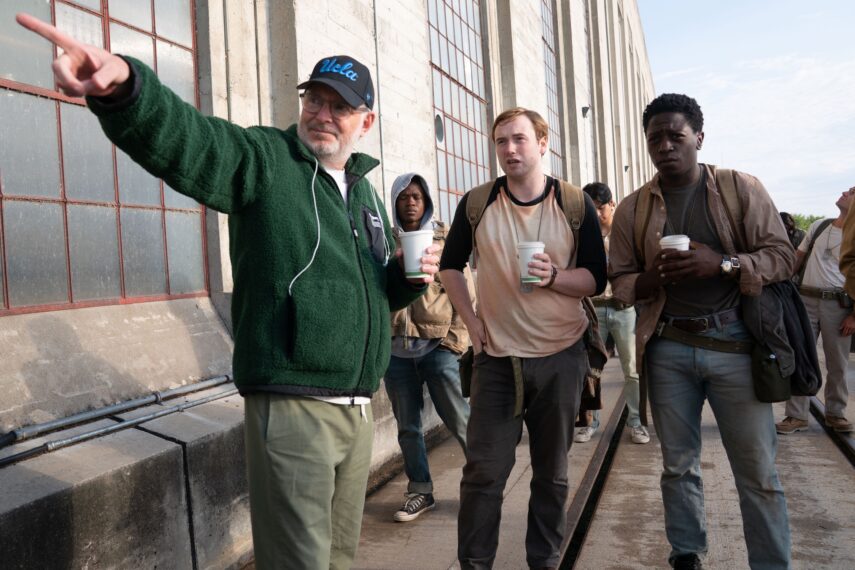
Director Francis Lawrence and actors Cooper Hoffman and David Jonsson on the set of The Long Walk (Murray Close/Getty Images)
Evolving together as artists only makes art better, right? Hopefully you guys do many more movies together because it’s a great onscreen pair. And hopefully you’ll get to work with Maggie Gyllenhaal too, like you want to. Maybe you’ll both be directed by her. Put that out into the universe.
I feel like I’ve just said Maggie Gyllenhaal this whole interview [laughs].
This is an interview about Maggie Gyllenhaal.
[Laughs] Yeah, sorry about that.
Bram Stoker’s Dracula, Available Now, Audible